
SEO for Hotels
You've made somewhere lovely to stay. Now let's make sure people can find it, and book it without paying anyone else for the privilege.
You've made somewhere lovely to stay. Now let's make sure people can find it, and book it without paying anyone else for the privilege.

Every stay starts with a search, usually a vague one ("a romantic hotel on the Amalfi Coast with a sea view and a pool") that gets more specific by the minute. Hotel SEO puts your website in front of guests at each step, in Google's results and in AI answers, until the last click is a direct booking on your own site (with Booking.com none the wiser).
Nobody books a week in Santorini on a whim (well, almost nobody). They search around, ask ChatGPT for a second opinion, and usually book one of the hotels on the first page of Google or in ChatGPT's shortlist. Good hotel SEO puts yours in both, and when guests book through your own site, the 15 to 30% an OTA would have taken (opens in a new tab) stays with you.
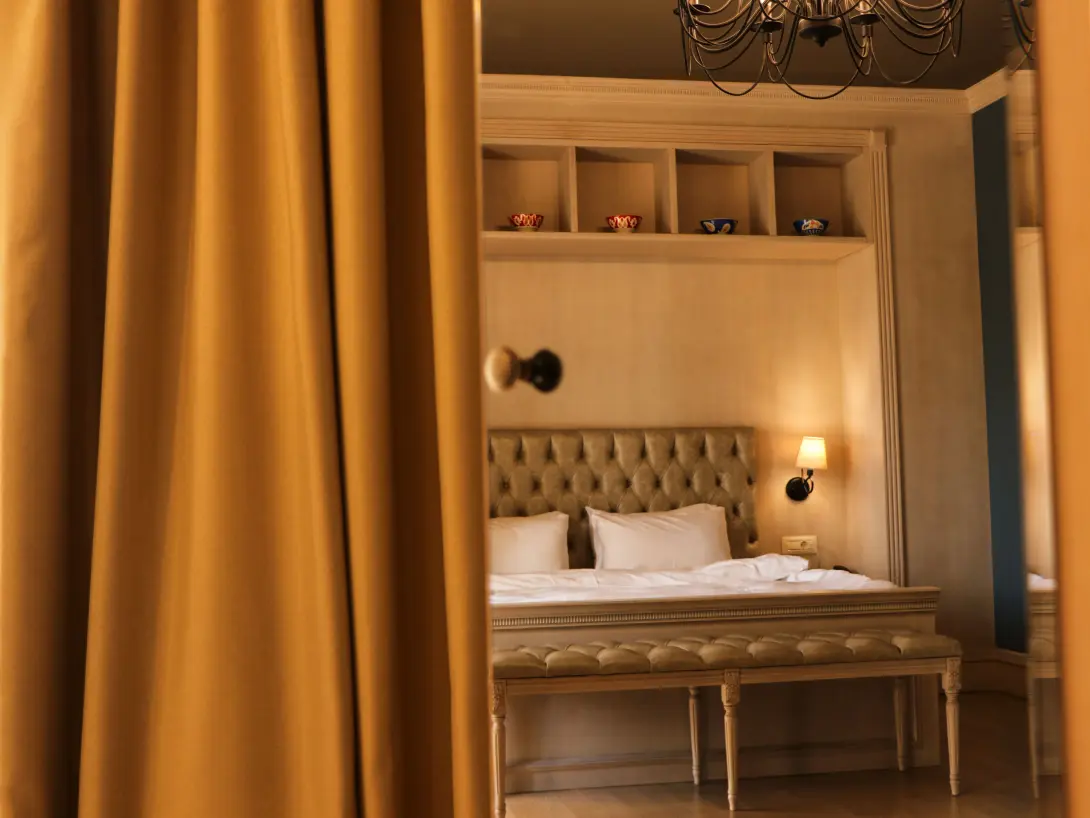
Before anyone books, they have questions, like "can we bring the dog?" and "how far is the beach on foot?" When your website answers them clearly, guests book with confidence, and Google and AI tools like ChatGPT have what they need to recommend you. Given the choice, we'd always visit a hotel before writing about it, since there's no substitute for standing in the room you're describing. From there, each page is planned around what guests search for and written in your hotel's own voice.
Your Google Business Profile is often the first thing a guest sees of your hotel, on Google Maps and in Google's AI answers. Once every detail is checked and your booking engine is connected, your own rate can appear right next to Booking.com's, marked "Official site". Then we look after it month by month, adding new photos and hotel updates, and replying to every review in your voice.
Ask Claude for a boutique hotel in Lisbon and it won't simply take your word for it, and neither will Google. Both look at what travel writers and review sites say about you, and favour the hotels everyone seems to agree on. With a Telegraph byline and more than 500 published travel guides behind us, we know what travel editors look for, and our digital PR puts your hotel in front of them.
If you'd like more guests booking with you directly, we'd love to hear about your hotel. Send over your website, and you'll get a few thoughts on how it's showing up on Google and in AI answers.
Say helloSEO for a hotel website comes down to knowing what guests search for and giving each of those searches a clear page to land on. It might mean a page for your sea-view rooms and a guide to the beaches nearby, each with a title and headings Google can follow. It all needs to load quickly on both desktop and mobile, too.
Hotels usually get the best results from a mix of SEO and paid search (sometimes called SEM). Ads, including Google Hotel Ads, can fill rooms quickly, but every click or booking comes at a cost, and the guests stop coming when the budget does. SEO takes longer to build, and once it's working, it keeps bringing guests in without a bill attached.
A hotel SEO consultant tends to be a good fit for independent hotels that want someone who knows them well, while a larger agency offers a bigger team for hotel groups with several properties.
Hotel SEO usually takes four months to a year to show its full effect. Your Google Business Profile can move faster, sometimes within weeks. And unlike an ad, a good page keeps bringing guests in long after it's written.